Best Electrosurgical Bipolar Monopolar Diathermy Electrodes

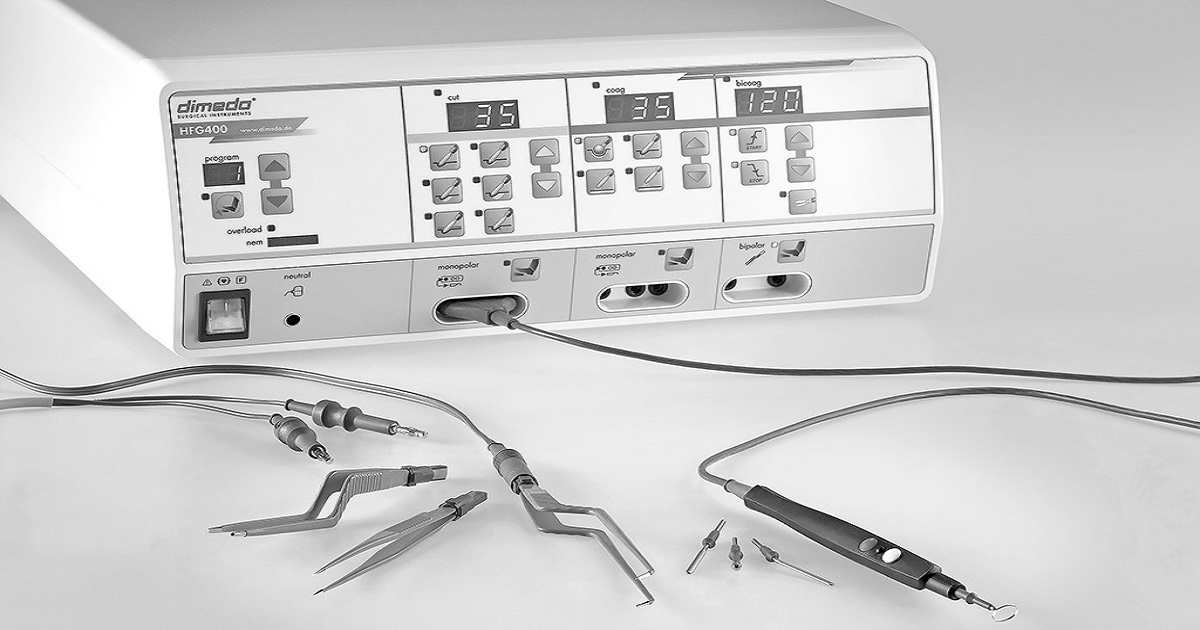
Electrosurgical technologies now revolutionize the modern surgery practice and are used to cut and coagulate the tissue concurrently using radiofrequency energy. Bipolar and monopolar electrosurgical, with diathermy output supplied by advanced diathermy generators, offer flexible solutions between the least invasive laparoscopic surgery and the most severe open cardiothoracic surgery.
This high-frequency current is specifically guided by the cornerstone electrodes, and cellular vaporization is attained with controlled thermal profiles that limit adjacent tissue damage. Clinical trials indicate that Electrosurgical Instruments reduce intraoperative blood loss by 70-85 percent; improve hemostasis, and place these systems as invaluable assets in high-volume surgical facilities around the globe.
General Principles of Electrosurgical Diathermy
Electrosurgical diathermy functions within the therapeutic range of 200kHz to 3.3MHz and leads to intracellular heating via the Joule heating in the form of molecular agitation. Pure sinusoidal waveforms can be cut easily through explosive vaporization, and damped sinuoidal bursts allow desiccation coagulation.
Monopolar Electrosurgery Closer to the Truth
In monopolar architecture, active current is delivered through handheld electrodes to a remote dispersive pad through patient tissues to cause peak densities at the tip to act incisively. Contemporary generators use dynamic tissue-response algorithms to vary voltage dynamically in response to changes in impedance between 50-500 ohms. This gives uniform behavior in different hydration conditions of tissues in fatty mesentery to vascular parenchyma.
Dynamics of Bipolar Electrosurgery Containment
Weak electric currents are focused inside a pair of forceps tines in opposing forces by bipolar diathermy, which is usually 2-5mm apart, significantly reducing the distribution of current and removing the need for pads. Desiccation overheating is avoided by real-time power adjustment through feedback of tissue conductance to maintain vessel patency until desired sealing thresholds are reached to start protein denaturation cascades.
Advanced Bipolar Electrosurgical Forceps Usage
Hemostatic issues in anatomically limited areas are dominated by precision-engineered bipolar forceps. Mechanical compression is followed by activation of RF, which extrudes blood to enhance collagen welding.
Neurosurgical Bipolar Diathermy Supreme
In Thailand, bipolar electrodes that look like bayonets are used to reduce the adhesion of heat to the electrode in the case of glioma resections around the motor cortex and ensure that the tip does not exceed 80 °C. Multimodal waveforms allow both pinpoint coagulation and blunt dissection, and clinical trials have shown a 40 percent reduction of blood loss compared to traditional procedures.
Laparoscopic Bipolar Vessels Sealing Advanced
Long 35cm shaft bipolar dissectors have hydraulic closure forces of 200psi compressive forces in advance of 120W bipolar pulses. FDA-cleared systems exhibit burst pressures that are more than 600mmHg, and it is higher than the vascular staplers in cost-effectiveness in performing gynaecologic oncology surgeries.
Complete Monopolar Diathermy Electrode Portfolio
Monopolar electrode morphology is varied in functionality - L-hook morphology undercuts flaps, spatula morphology fulgurates expansive surfaces, and diamond dust ball morphology polishes bone interfaces.
Architectures of Special Cutting Electrodes
The needle electrodes have PTFE insulations to penetrate 1-2mm incisions that allow neurovascular sparing of thyroidectomy. Harmonic scalpel hybrids overlay both monopolar RF and ultrasonic vibration to both excise and seal up to 5mm vessels.
Inventions of Coagulation-Based Electrodes
Adjustable length ultrasonic ball electrodes aiming at liver transaction planes are able to achieve hemostasis rates that exceed 95 percent according to the latest meta-analyses. The Argon plasma coagulation probes will extend non-contact effects to a depth of 8-12mm, which is ideal in GI endoscopy.
Intense Electrosurgical Safety Architectures
Contact Quality Monitors circuits probe pad-tissue interfaces 200,000 times per second and set audible alarms at 100,000 Ohms. Violations are detected through low-level test signals using active electrode surveillance.
Next-Generation Return Electrode Systems
Symmetric Current distribution is obtained by dual-segment return pads, which have independent sensing halves, reducing burn incidence to less than 0.1 percent. Adaptive surface gels are conductive to differences in perspiration.
All-purpose Smoke Evacuation Integration
Wall suction units using the HEPA filter capture submicron particulates at 99.97 percent, and laser-plume investigations reveal the viability of HPV DNA that highlights evacuation urgencies.
State-of-the-Art Diathermy Surgery Frontiers
Superficial ablation was done with electrosurgical jets that focused on helium plasma in their beams. Pulsed RF generators give bursts that are microseconds long, reducing carbonization.
Multimodal Hybrid Electrosurgical Platforms
The bipolar RF and dynamic compression algorithms in Ligasure and Enseal technologies are reliable sealers of 7mm arteries up to 400mmHg pressures. Thunderbeat systems simultaneously use ultrasonic shears and high bipolar jaws.
Smooth Electrosurgical Harmonization of Robots
Proprietary PK and Precise bipolar dissectors are compatible with the da Vinci systems that can filter tremor in physiologic tremor to maintain prostate neurovascular bundle higher than 90 percent potency rates.
Stringent Electrode Maintenance Programmes
The cutting efficiency is maintained through automated ultrasonic removal of proteins, and the edge radii, which are below 10mu are measured by profilometry. Pre-case deployment, Electrical continuity testing confirms insulation integrity.
The validation of the 75-cycle reusability of premium bipolar forceps through reprocessing workflows balances the economic considerations with the promises of single-use sterility.
Electrosurgical Mastery Discipline-Specific
Otolaryngology uses malleable bipolar tips in robotic surgery transorally. Ophthalmology is in combination with glaucoma filtration using monopolar micro-needles.
The orthopedic arthroscopy uses saline-compatible bipolar wands, which avoid fluid interference. Maze lesions are used through the use of cardiothoracic procedures, where shy can make use of long shaft ablation probes.
Conclusion
Advanced electrosurgical bipolar and monopolar diathermy with the capability of the state-of-the-art electrodes provides an unprecedented accuracy, speed, and safety profile at surgical extremes. Medical facilities implementing such innovations achieve a drastic reduction in transfusion needs, working time, and infectious complications. Electrosurgical leadership to create new generation surgical models.
FAQs
Q1: Differentiate between the bipolar and monopolar?
A: Bipolar limits energy transmission between forceps poles; monopolar closes the circuit through the body pad and allows wider use.
Q2: Why is there no electrode-tissue adhesion during diathermy?
A: An intermittent irrigation and hydrophobic coating of the interfaces ensures clean interfaces in protracted electrosurgical activation.
Q3: What are the best power preferences in tissues?
A: 40-100W cut parenchyma, 60-200W customable an electrosurgical generator with tissue sensing.
Q4: Does it have special storage for monopolar electrodes?
A: Sterile wrappings maintain insulation; corrosion in reusable diathermy electrodes can be prevented by humidity control.
Q5: What is the reason behind the necessary smoking control during electrosurgery?
A: Evacuation eliminates plume biohazards, which protect the theater staff during monopolar vaporization operations.
Read Also


Jun 13, 2022
4 Best Membership WordPress Plugins
Having a membership website will increase your reputation and strengthen your engagement w


Comments (0)